

 Australia
 New Zealand
 Other Countries
 24/7 Support
Updated
Tasmania is a popular tourism destination among both international and domestic travellers in Australia. It attracts visitors with a mix of natural and cultural attractions, including national parks, heritage sites, and great food.
How many tourists visit Tasmania each year?
Over 3.4 million tourists visit Tasmania each year.
- Over 3.5 million total tourists visited Tasmania in 2019, marking a pre-pandemic peak.
- Visitor numbers dropped during the pandemic years of 2020 to 2021, with recovery beginning in 2022 as arrivals increased to 3.08 million and continued growing through 2023 with 3.23 million visitors.
- Tasmania recorded approximately 3.44 million overall visitors in 2024, nearly matching the pre-pandemic peak.
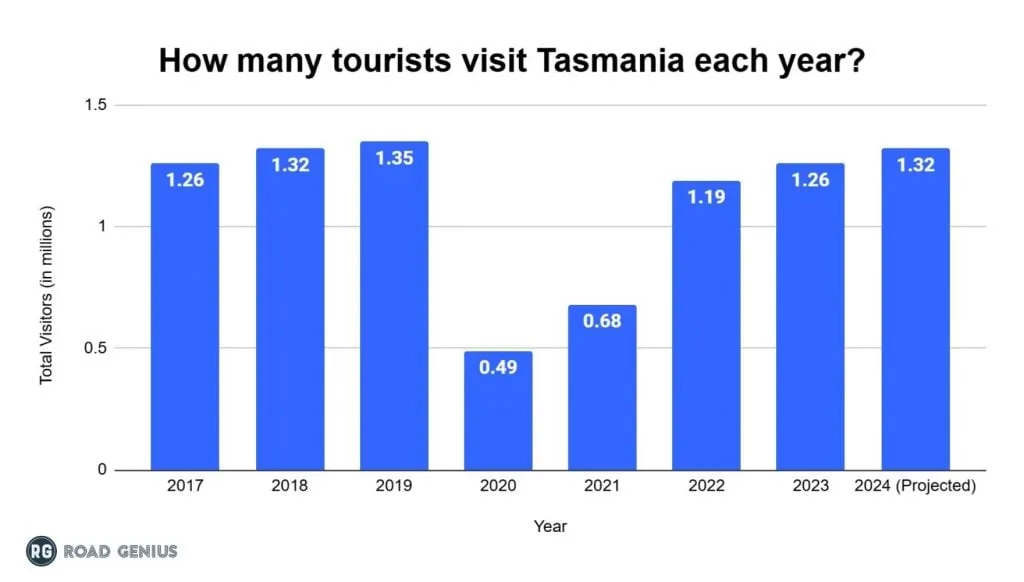
How many tourists visited Tasmania in 2022?
Tasmania welcomed 1.19 million visitors in 2022, with domestic tourists making up around 86% (1.02 million) and international visitors comprising approximately 14% (167,000) of the total arrivals.
- This represents a 75% increase compared to the 680,000 arrivals in 2021.
- Compared to the pandemic-stricken year of 2020, which saw only about 490,000 visitors, the 2022 numbers show a 143% increase.
- 2022's figures remained approximately 12% lower than the pre-pandemic peak of 1.35 million visitors recorded in 2019.
How many tourists visited Tasmania in 2024?
Tasmania welcomed 3.44 million overall visitors in 2024.
- In 2024, Domestic tourists accounted for approximately 93% (3.19 million), while international visitors comprised approximately 7% (0.25 million) of the total arrivals in Tasmania.
- This represents an approximately 7% increase from 2023 and stands just approximately 2% below the 2019 pre-pandemic peak, confirming Tasmania's near-complete tourism recovery.
How many tourists visited Tasmania in 2023?
Tasmania welcomed 3.23 million overall visitors in 2023.
- In 2023, domestic tourists accounted for approximately 94% (3.03 million), while international visitors comprised approximately 6% (0.20 million) of the total arrivals in Tasmania.
- This represents an approximately 5% increase from 2022 and stands approximately 8% below the 2019 pre-pandemic peak, indicating a continued recovery trend.
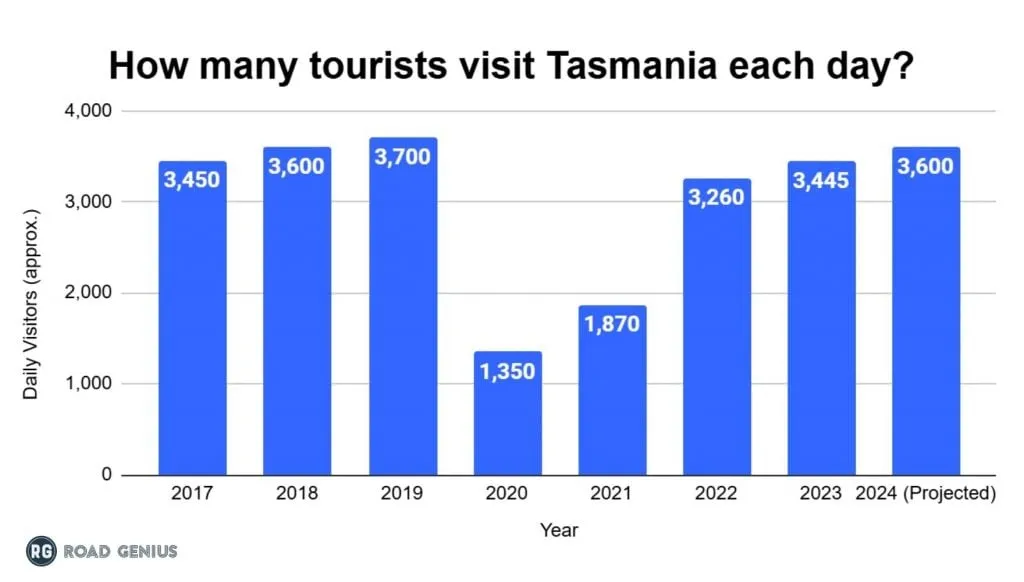
How many tourists visit Tasmania each day?
- Tasmania welcomes an average of 9,400 visitors daily in 2024, approaching the pre-pandemic peak of 9,600 daily visitors recorded in 2019 and representing a strong recovery from the pandemic low of 6,200 daily visitors in 2020.
How much do tourists spend in Tasmania each year?
Tourists spend over AUD 4 billion in Tasmania each year.
- Tourism revenue reached AUD 3.38 billion before the pandemic in 2019.
- A 46% decline followed, bringing revenue down to AUD 1.84 billion in 2020 due to COVID-19 restrictions.
- Early signs of recovery emerged as revenue increased by 45% to AUD 2.67 billion in 2021, though still 21% below 2019 levels.
- A strong rebound pushed revenue up by 36% to AUD 3.63 billion in 2022, surpassing pre-pandemic levels by 7%.
- Steady growth led to a 14% increase, reaching AUD 4.15 billion in 2023, maintaining a 23% lead over 2019.
- Continued momentum brought revenue up by 3% from 2023 to AUD 4.29 billion in 2024, standing 27% higher than 2019 levels.
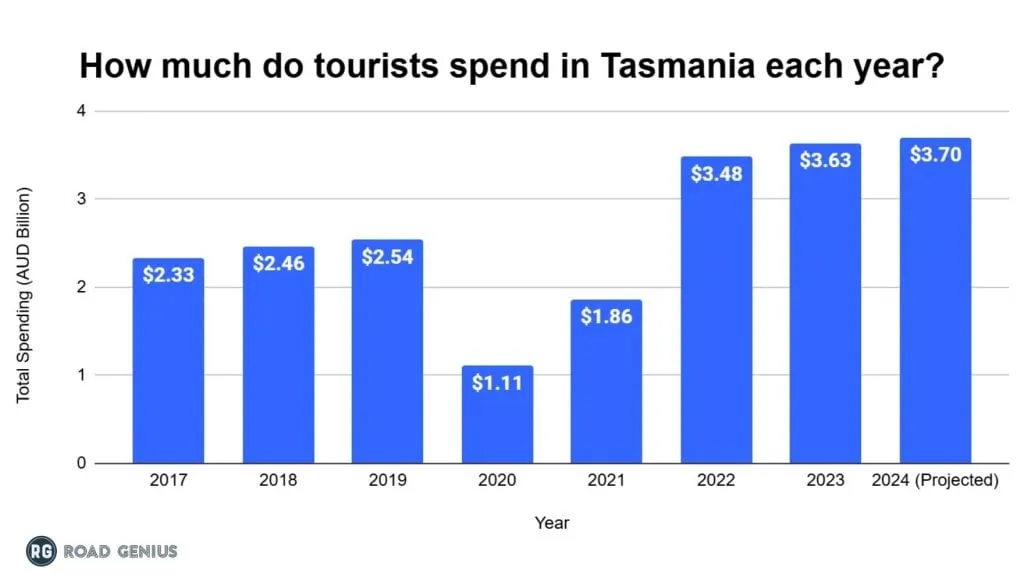
How much do tourists spend in Tasmania in 2022?
Tourist expenditure was AUD 3.48 billion in 2022, an 87% surge from AUD 1.86 billion in 2021 and 214% above AUD 1.11 billion in 2020.
- Domestic tourists spent AUD 3.33 billion, while international visitors contributed AUD 153 million in 2022.
How much do tourists spend in Tasmania in 2024?
Total tourist spending reached AUD 4.29 billion in 2024, a 3% increase from 2023.
- Domestic tourists contributed AUD 3.74 billion, while international visitors spent AUD 0.55 billion in 2024.
How much do tourists spend in Tasmania in 2023?
Total spending reached AUD 4.15 billion in 2023, up 14% from 2022.
- Domestic visitors accounted for AUD 3.78 billion, and international tourists spent AUD 0.37 billion in 2023.
How much does it cost to visit Tasmania?
All visitors spent an average of AUD 1,246 per trip in 2024, reflecting AUD 127 per day across an average stay of 9.8 nights.
- Domestic Visitors: Average spend of approximately AUD 1,173 per trip in 2024, with an average stay of 9.6 nights (about AUD 122 per day).
- International Visitors: Average spend of approximately AUD 2,200 per trip in 2024, with an average stay of 10.7 nights (about AUD 206 per day).
Which regions visited Tasmania the most?
- Among domestic visitors, Victoria is the largest source market, with approximately 480,000 visitors in 2024.
- New South Wales contributed around 310,000 visitors, while Queensland provided about 180,000 visitors in 2024.
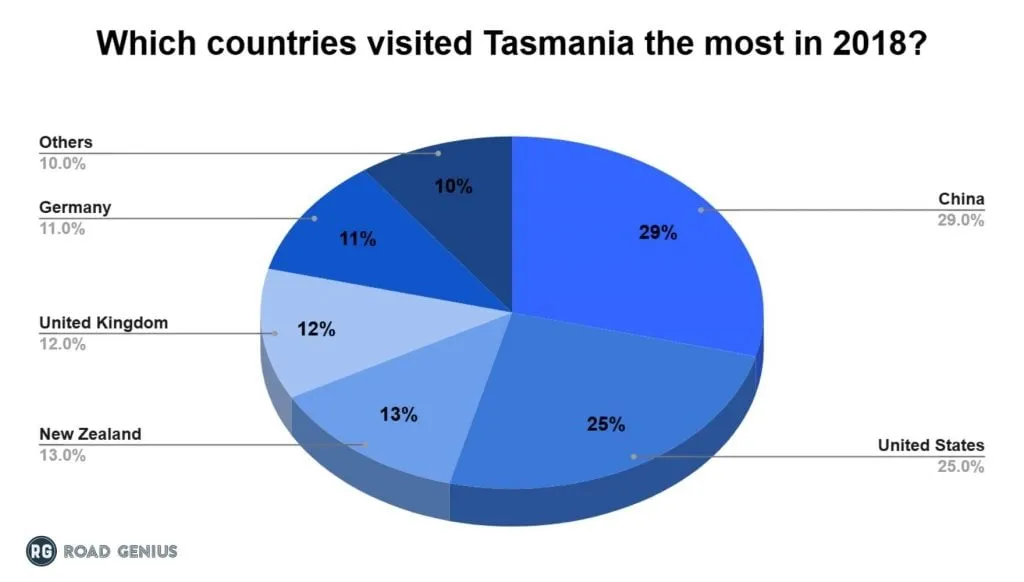
Which countries visited Tasmania the most?
- The United States accounts for the largest share of international visitors, comprising 16% of the total in 2024.
- Other key source markets include the United Kingdom (10%), Hong Kong (9%), China (8%), New Zealand (8%), and Other Countries (49%) in 2024.
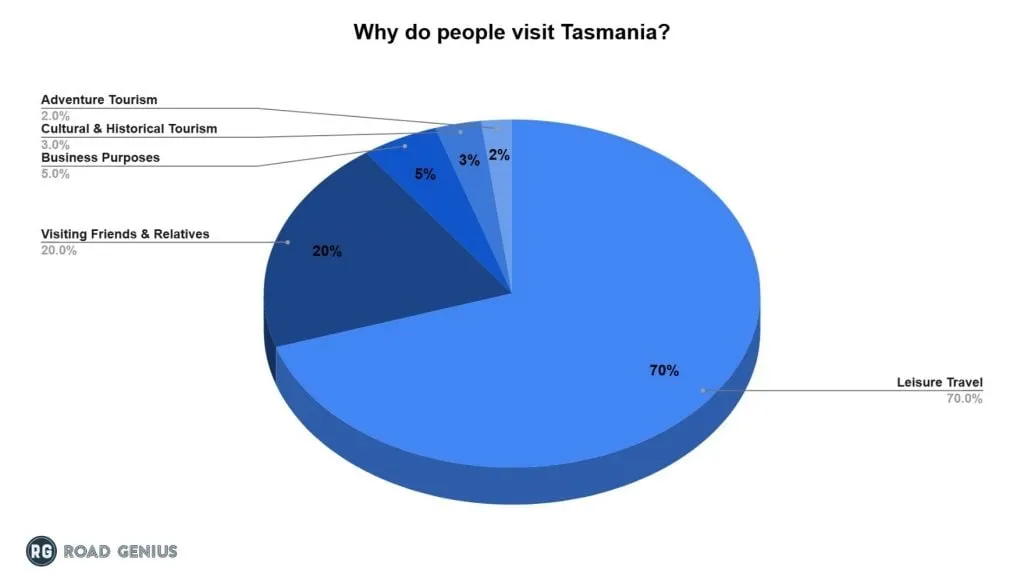
Why do people visit Tasmania?
- Leisure Travel: 70% of visitors engage in leisure travel in 2024, enjoying Tasmania's natural landscapes, national parks, and food experiences.
- Visiting Friends and Relatives: A significant 20% of tourists visit friends and family in 2024, mainly from mainland Australia
- Business Purposes: Business travelers make up 5% in 2024, attending conferences, trade events, and professional engagements.
- Cultural and Historical Tourism: 3% of tourists are drawn to Tasmania's cultural and historical sites in 2024, including heritage buildings and museums.
- Adventure Tourism: Adventure seekers represent 2% in 2024, enjoying hiking, biking, and water sports in Tasmania's diverse terrains.
How popular is Tasmania as a tourist destination?
Tasmania ranked among the top 15 most-visited destinations in Australia in 2024, based on visitor arrivals and overnight stays.
- The state attracted approximately 3.44 million visitors in 2024, accounting for 6.4% of Australia's total domestic and international tourism market.
- Cradle Mountain, Freycinet National Park, and MONA remained among the top 10 most-visited attractions in Tasmania, drawing over 700,000 visitors collectively in 2024.
- Visitor expenditure in Tasmania grew by approximately 3% year-over-year, reaching AUD 4.29 billion in 2024, and this period also saw an approximate 3% decrease in average trip spending compared to 2023.
When is the best time to visit Tasmania?
Tasmania is a year-round destination, but September through November (spring) and March through May (autumn) offer the best balance of pleasant weather, fewer crowds, and exciting events.
- Spring (Sep-Nov) features mild weather (10-18°C), blooming wildflowers, and events like Tasmania's Dark Mofo in June, while summer (Dec-Feb) brings peak tourist season with warm sunny weather (15-23°C) perfect for hiking and major events like The Taste of Tasmania.
- Autumn (Mar-May) offers crisp, clear days ideal for exploring national parks and wine regions, often coinciding with harvest festivals, while winter (Jun-Aug) provides cooler temperatures (5-12°C) perfect for museums, cozy accommodations, and the unique Dark Mofo winter arts festival.
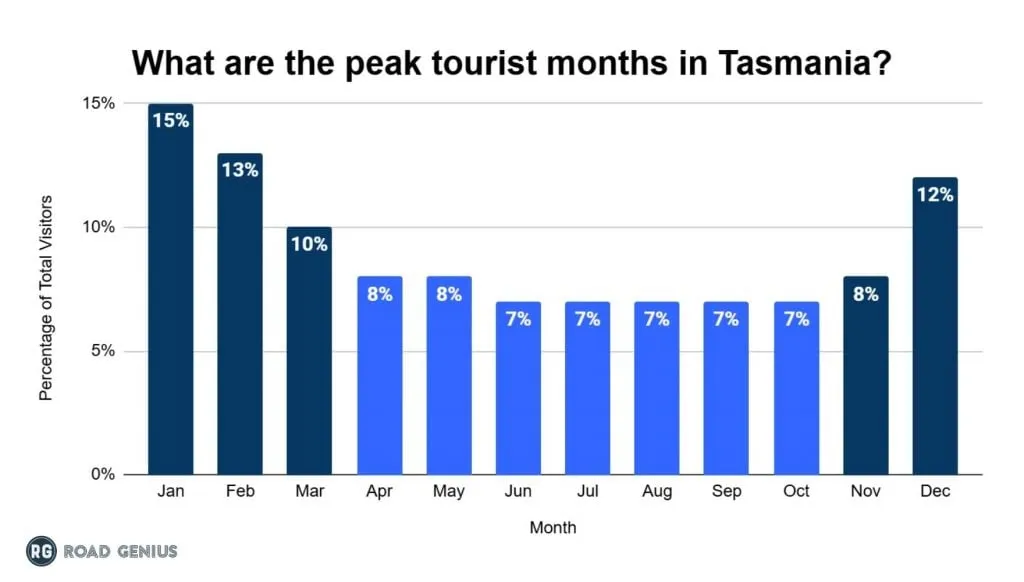
What are the peak tourist months in Tasmania?
January and February each represent high shares of yearly Tasmania tourism in 2023.
- January is the busiest month, accounting for 15% of total visitors, followed by February with 13% in 2023.
- December sees about 12%, and March accounts for 10% of annual visitors in 2023.
How long do visitors stay in Tasmania?
The average length of stay for all visitors is about 9.8 nights in 2024.
- The average length of stay for international visitors is approximately 10.7 nights in 2024.
- For domestic visitors, particularly interstate holiday visitors, the average length of stay has returned to around 9.6 nights in 2024.
Economic Impact - Tasmania Tourism Statistics 2024
- Tasmania's tourism revenue reached approximately AUD 4.29 billion in 2024.
- The tourism sector supports approximately 42,900 jobs and contributes around 5% to Tasmania's Gross State Product (GSP).
- Tourism revenue increased by approximately 3% compared to 2023, confirming continued recovery.
Impact of COVID-19 on Tasmania Tourism (2020-2021)
- Total visitors dropped to approximately 2.26 million in 2020, a decline of 35% from the pre-pandemic peak of 3.5 million in 2019.
- Numbers increased to around 2.65 million in 2021, marking the start of recovery.
- Visitor spending declined to AUD 1.84 billion in 2020, a decrease of 46% from AUD 3.38 billion in 2019.
- Spending began to recover in 2021, reaching AUD 2.67 billion, up 45% from 2020.
Unique Festivals and Events in Tasmania
- Dark Mofo (June) annually attracts over 45,000 visitors, making it Tasmania’s largest winter arts and music festival.
- The Taste of Tasmania (January) consistently hosts more than 50,000 visitors each year, showcasing regional culinary exhibitions and local produce.
- The Sydney to Hobart Yacht Race (December) draws thousands of spectators and participants every year..
- Targa Tasmania (April) features over 300 racing vehicles annually, covering approximately 2,000 kilometers of routes across the state.
- The Falls Festival (December) regularly brings in approximately 15,000 music fans annually, including both domestic and international attendees, as one of Tasmania's leading music events.
Unique Markets and Bazaars to Visit in Tasmania
- Salamanca Market in Hobart operates every Saturday with over 230 stalls, attracting approximately 25,000 weekly visitors.
- Launceston Farmers' Market, running since the early 2000s, hosts around 70 vendors and draws roughly 1,000 visitors weekly.
- Devonport Craft Market occurs monthly, featuring more than 100 regional vendors and averaging approximately 2,000 visitors per event.
- North West Gallery Market in Burnie regularly presents around 50 stalls, typically attracting several hundred visitors per market day.
- Hobart Waterfront Market features over 40 stalls and receives around 3,000 visitors per market session, providing fresh seafood and local specialties.
- Adelaide Tourism Statistics
- Bondi Beach Tourism Statistics
- Byron Bay Tourism Statistics
- Gold Coast Tourism Statistics
- Great Ocean Road Tourism Statistics
- Noosa Tourism Statistics
- Perth Tourism Statistics
- Sea World Australia Tourism Statistics
- Sunshine Coast Tourism Statistics
- Sydney Opera House Tourism Statistics
- Uluru Tourism Statistics
- Warner Bros. Movie World Tourism Statistics
What to visit in Tasmania?
- Hobart: Approximately 700,000 visitors annually visit Hobart, the capital city, known for its historic waterfront and the Museum of Old and New Art (MONA).
- Launceston: Around 300,000 visitors annually visit Launceston, celebrated for its heritage architecture and Cataract Gorge.
- Cradle Mountain: Approximately 280,000 visitors annually explore Cradle Mountain, known for its rugged wilderness and hiking trails.
- Freycinet National Park: Around 250,000 visitors annually visit Freycinet National Park, famous for Wineglass Bay and its coastal scenery.
- Port Arthur: Approximately 200,000 visitors annually visit Port Arthur, recognised for its historical significance and convict heritage.
References
- Tasmania Tourism Statistics — Tourism Tasmania · tourismtasmania.com.au
- Tourism Spending Statistics - The Great Barrier Reef · Tourism Research Australia